ParentPilot
We started with a babysitter app. 12 parent interviews killed it. Here's what the research actually told us to build.
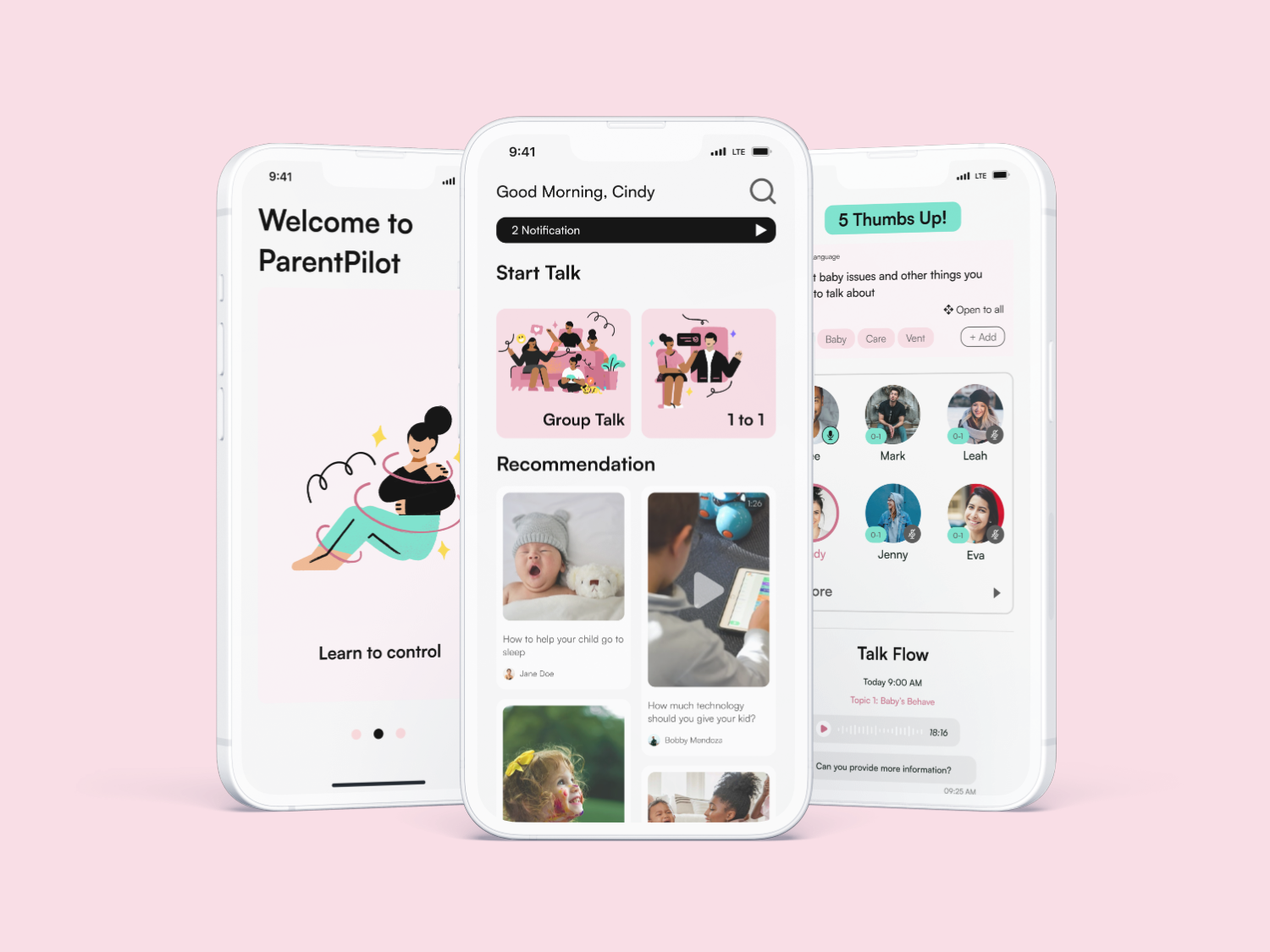
The Problem
The transition to parenthood is one of the most overwhelming life changes a person faces — yet new parents are expected to figure it out largely alone. Existing apps address logistics: feeding schedules, sleep tracking, childcare. None of them address what parents actually struggle with most: feeling isolated, misunderstood, and emotionally exhausted.
Research & Discovery
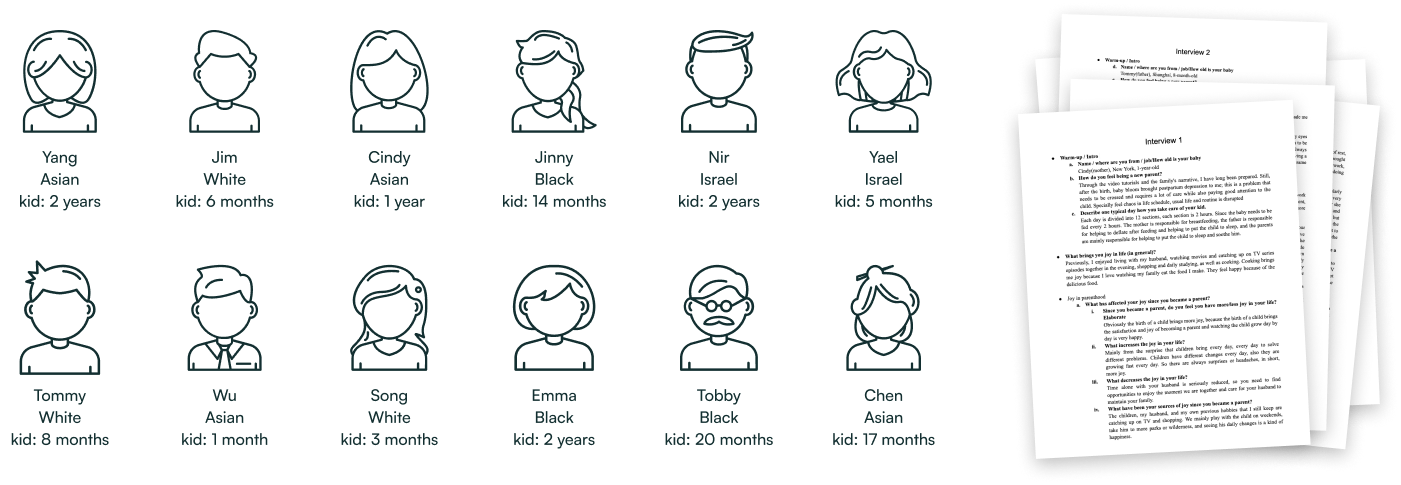
12 parents, coast to coast
We interviewed 12 parents with diverse backgrounds — different ages, ethnicities, family structures, and children's ages. Two teammates were themselves new parents, which gave us genuine empathy alongside structured research.
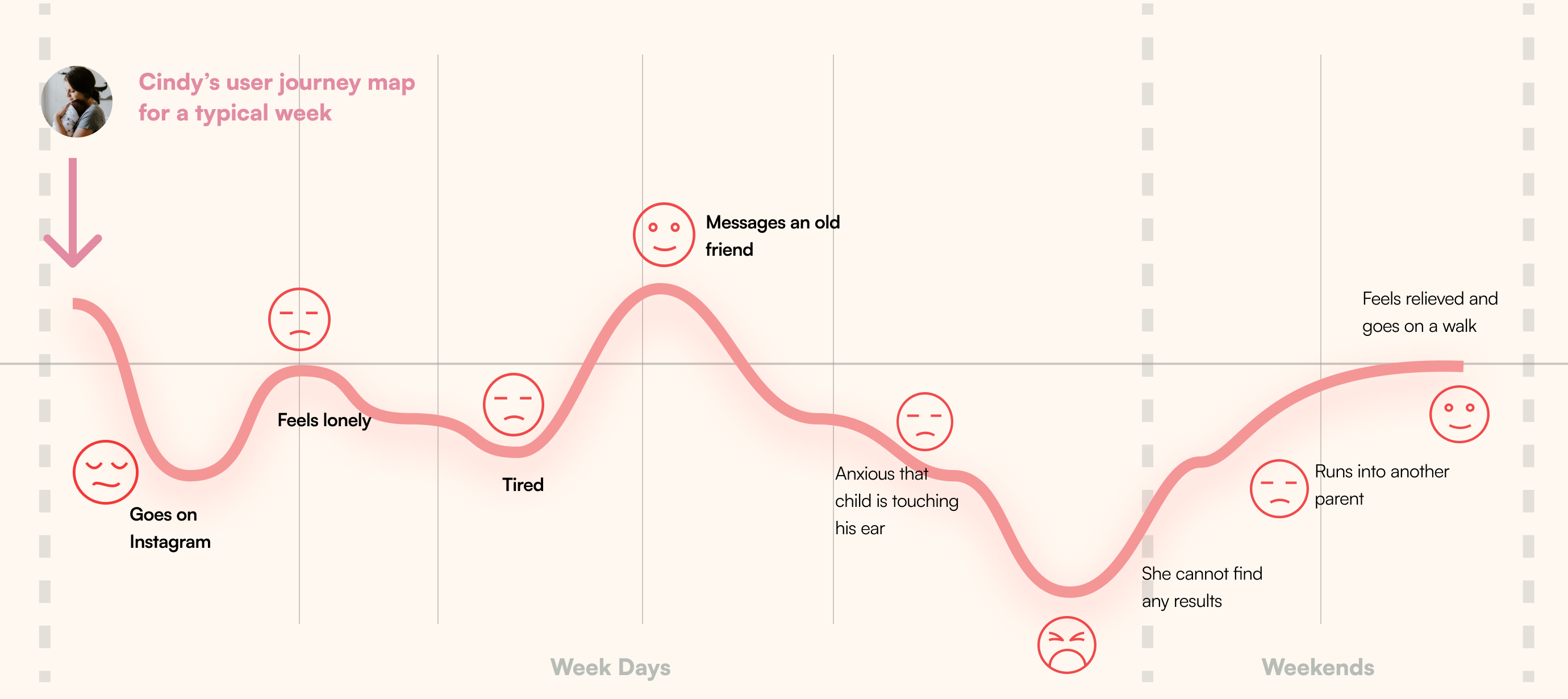
Mapping the emotional week
We built a journey map for our primary persona, Cindy — a 30-year-old new mom. Plotting her emotional state across a typical week made the pattern undeniable: the lows weren't about logistics. They were about loneliness.
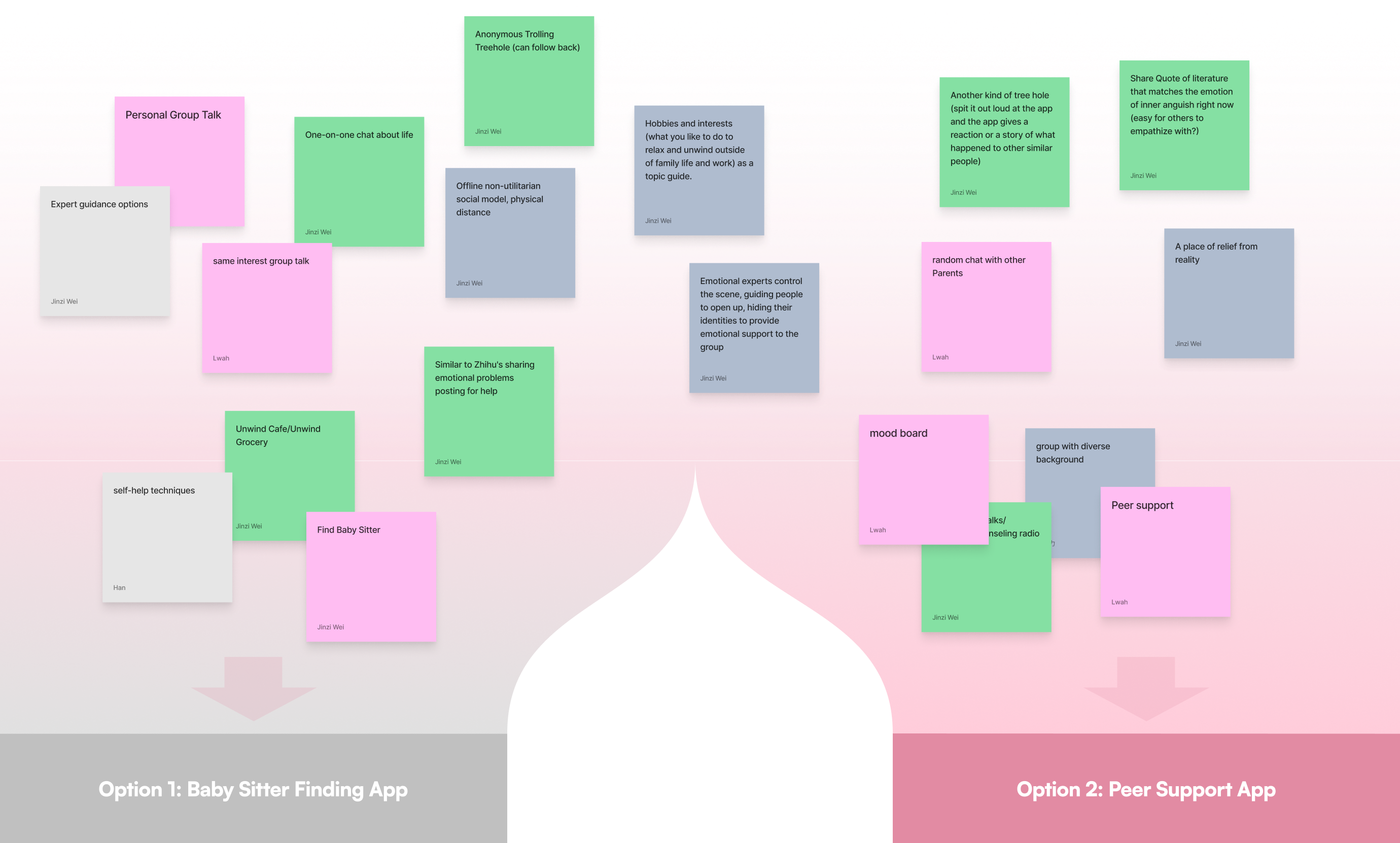
Affinity map splits at the fork
We coded every transcript — warm colors for joy-increasing factors, cool for joy-decreasing — then clustered in FigJam. The board split cleanly into two product directions. That split became the most important decision of the project.
Research killed the babysitter app.
That was the right call.
Our original concept was a babysitter-finding app. User testing surfaced a fundamental blocker: parents didn't trust leaving their newborn with a stranger found through an app. That trust gap wasn't a UX problem we could design around — it was a product-level dead end.
The affinity map pointed elsewhere. The #1 factor destroying parental joy wasn't logistics — it was emotional isolation. We pivoted to peer-to-peer support, inspired by how group dynamics in rehab programs create safety through shared experience. Parents helping parents.
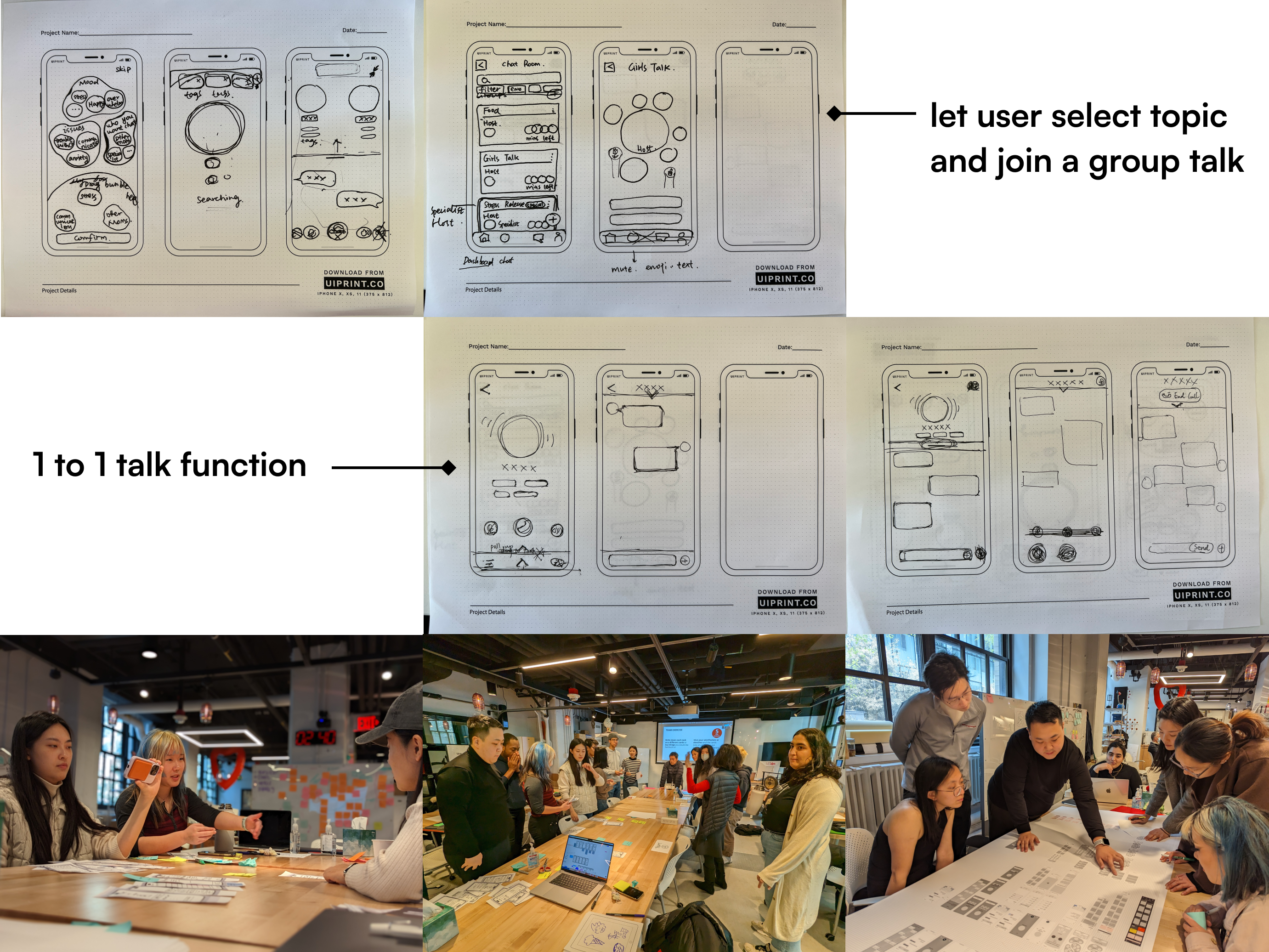
Sketch sessions exploring both directions before committing to the pivot
What I Built
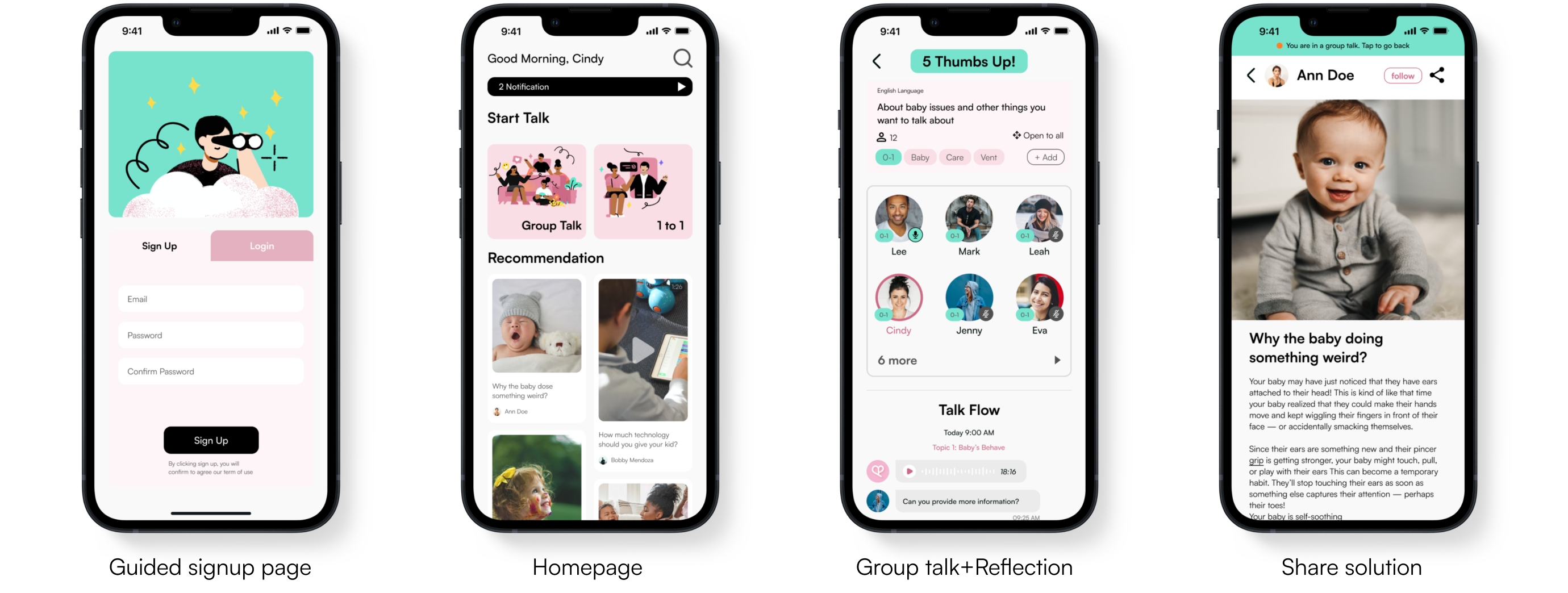
ParentPilot gives new parents a safe, low-friction space to be heard — organized by topic, rewarding vulnerability, and turning shared experience into a living resource.
Group Talk
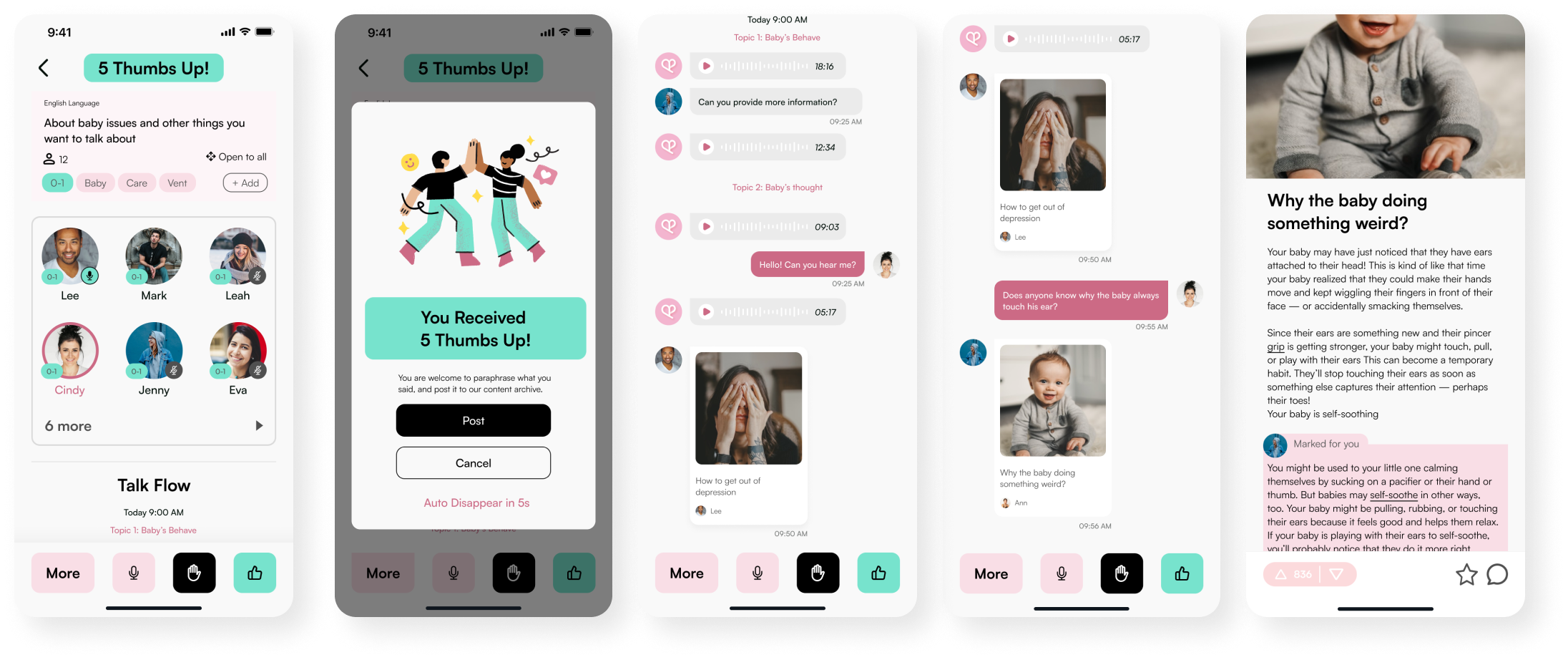
Thumbs Up!
Share Solutions
Group Talk
Topic-based rooms — sleep, partner tension, feeding — so parents find their people instantly. Open to all, no invite needed.
Thumbs Up!
One tap tells someone they're not alone. A simple positive feedback loop that keeps people sharing honestly.
Share Solutions
Parents mark useful content in the thread — turning conversations into a living resource, not a scroll-and-forget feed.
Design Decisions
Group rooms over direct messaging
Parents didn't want a pen pal — they wanted to feel less alone. Group conversations around shared topics create the 'others get it too' moment that 1-on-1 chat can't replicate. Topic rooms were the direct output of that insight.
Child info in signup for age-matched connections
User testing drove this addition. A parent of a 3-year-old and a parent of a 3-month-old have completely different needs. Collecting child age at signup lets the app surface relevant rooms and connect parents in the exact same phase.
Mood-first onboarding
Instead of a standard form, onboarding asks how you're feeling first. This sets an empathetic tone from the first tap and routes parents to relevant rooms before they have to search.
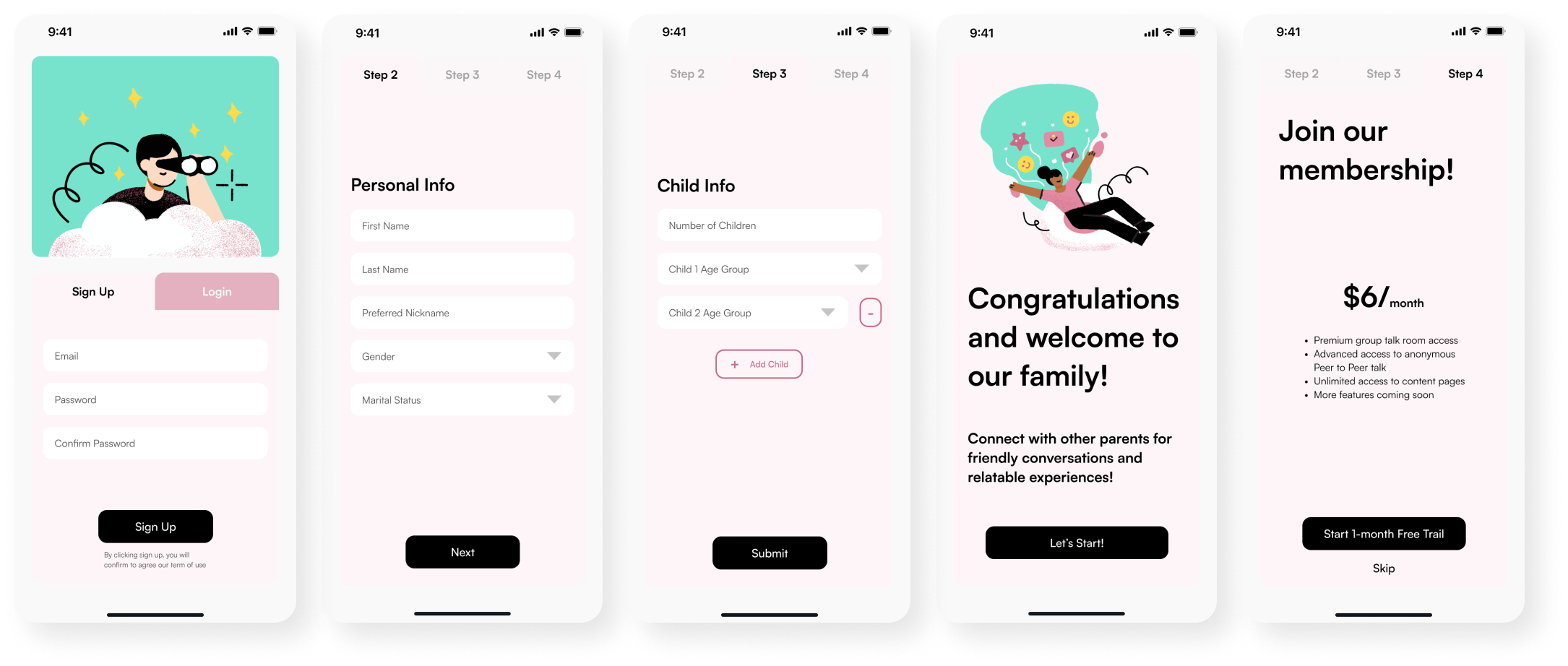
Onboarding: personal info → child ages → welcome to the community
Outcome
Pivot validated — The babysitter concept was killed early by user feedback, saving the team from building the wrong thing. The peer support direction tested significantly stronger in every session.
Strong reception — Multiple testers said ParentPilot addressed mental health and parenting concerns they hadn't found an app for before. The emotional framing resonated in a way logistics apps don't.
Research-first process — This project proved that user research doesn't just refine a direction — it can completely change it. The best design decision we made was being willing to throw away our first idea.